
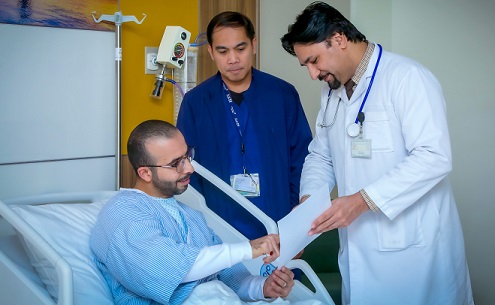
Saudi Hospital Advances Gene Therapy for Sickle Cell Disease Through Clinical Trial
King Faisal Specialist Hospital & Research Centre (KFSH) successfully applied gene therapy in a patient with sickle cell disease by modifying hematopoietic stem cells to correct the underlying genetic defect, followed by reinfusion of the modified cells, as part of a clinical trial aimed at expanding treatment options for patients ineligible for allogeneic stem cell transplantation.
The milestone reflects KFSH’s ongoing efforts to advance its gene therapy program, bridging clinical care with translational research. By leveraging patient-specific genetic profiles, the hospital is enabling more precise, personalized treatment approaches for complex conditions.
Beyond addressing the root cause of disease, gene therapy has a meaningful impact on patients’ quality of life. It helps reduce the frequency of painful health crises and minimizes reliance on long-term supportive treatments such as blood transfusions and repeated hospital admissions. This, in turn, supports greater health stability, improved daily functioning, and a lower risk of long-term complications.
The delivery of these therapies is supported by a robust clinical and regulatory framework, including comprehensive patient assessments, specialized treatment environments that meet strict safety and quality standards, and seamless collaboration across medical, research, and technical teams. All procedures are carried out in coordination with relevant health authorities and in line with internationally recognized standards.
King Faisal Specialist Hospital & Research Centre has been ranked first in the Middle East and North Africa and 12th globally among the world’s top 250 Academic Medical Centers for 2026 and recognized as the most valuable healthcare brand in the Kingdom and the Middle East according to Brand Finance 2025. It has also been listed by Newsweek among the World’s Best Hospitals 2025, the World’s Best Smart Hospitals 2026, and the World’s Best Specialized Hospitals 2026.
 Saudi News 247