

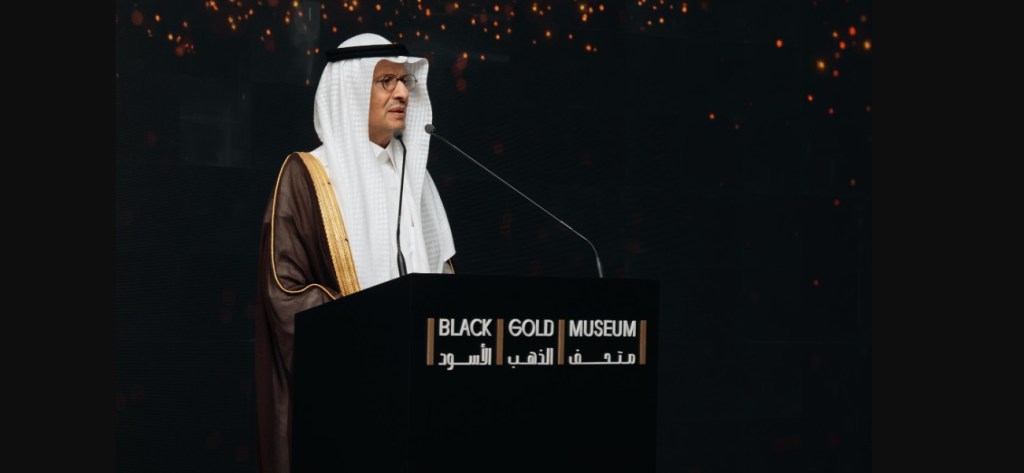
April 7, Riyadh: His Royal Highness Prince Abdulaziz bin Salman bin Abdulaziz Al Saud, Minister of Energy and Chairman of KAPSARC’s Board of Trustees, alongside His Highness Prince Bader bin Abdullah bin Farhan Al Saud, Minister of Culture, officially inaugurated the Black Gold Museum at KAPSARC, marking a significant milestone in Saudi Arabia’s cultural landscape.
The Black Gold Museum is the first of its kind, exploring the profound transformation and impact of oil on global development and societies through modern and contemporary art. It offers visitors the opportunity to engage with the story of “black gold” in an entirely new way.
His Royal Highness Prince Abdulaziz bin Salman bin Abdulaziz Al Saud, Minister of Energy and Chairman of KAPSARC’s Board of Trustees, stated that the museum is the result of collaboration between the cultural ecosystem, represented by the Museums Commission, and the energy ecosystem, represented by KAPSARC. It aims to present a comprehensive narrative of the history of oil and its far-reaching impact across all aspects of life.
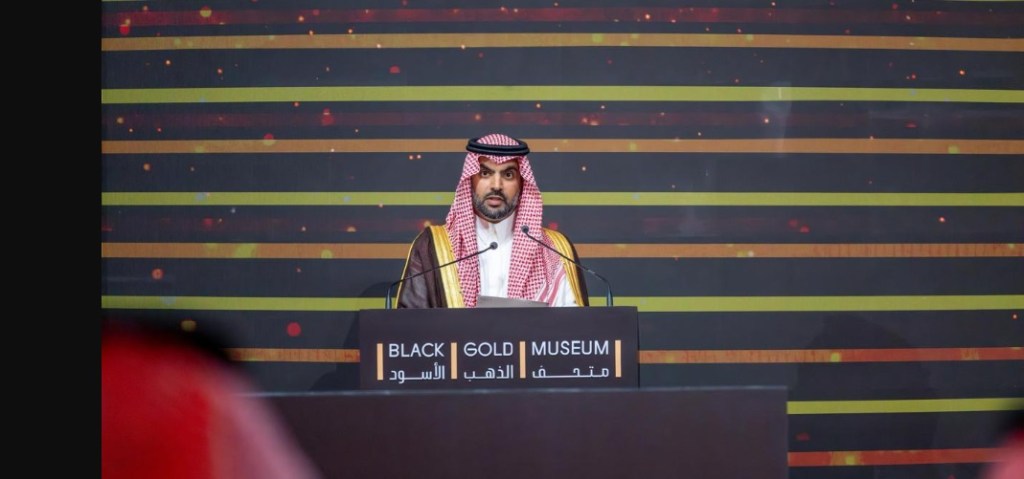
His Highness Prince Bader bin Abdullah bin Farhan, Minister of Culture, comments: “The Black Gold Museum marks an important milestone in the arts sector and global cultural discourse. As the first permanent museum dedicated to oil and art, it provides an unprecedented space for reflection and critical thought, and for celebrating the transformative power of culture in shaping our understanding of the world.”
The opening of the Black Gold Museum underscores the Museums Commission’s commitment to safeguarding history while fostering new forms of artistic expression.
Unlike traditional science or industry museums, the Black Gold Museum approaches oil through an artistic, cultural, and human lens. It features a permanent collection of more than 350 artworks from over 30 countries, created by more than 170 leading Saudi and international artists, including Manal AlDowayan, Ahmed Mater, Muhannad Shono, Mohammad Alfaraj, Ayman Zedani, Doug Aitken, Jimmie Durham, Dennis Hopper, Alfredo Jaar, Renaud Layrac, George Sabra, Pascale Marthine Tayou, and Andy Wauman, among others. In addition, the museum presents major installations, photographs, and historical documentation, offering visitors an opportunity to explore how oil has shaped societies, economies, and everyday life.
The museum is organized into four interactive sections: Encounter, Dreams, Doubts, and Visions. Encounter presents the global story of oil’s discovery and its early uses in the 19th century, highlighting its role in driving industrialization. Dreams traces how oil became a vital resource that reshaped societies and fueled development ambitions. Doubts offers a critical reflection on oil’s impact and the complexities of global reliance on it. Visions looks toward the future through a dynamic program of dialogue and discovery.
The Black Gold Museum is housed at KAPSARC in an iconic building designed by Zaha Hadid, with interiors by DaeWha Kang Design. The museum is supported by the Quality of Life Program, one of the Vision 2030 Realization Programs.
For more information and the latest updates, follow the Black Gold Museum on social media: X @BGM_moc and Instagram @bgm_moc.
END
 Saudi News 247